
How to Replace a Washing Machine Drive Belt

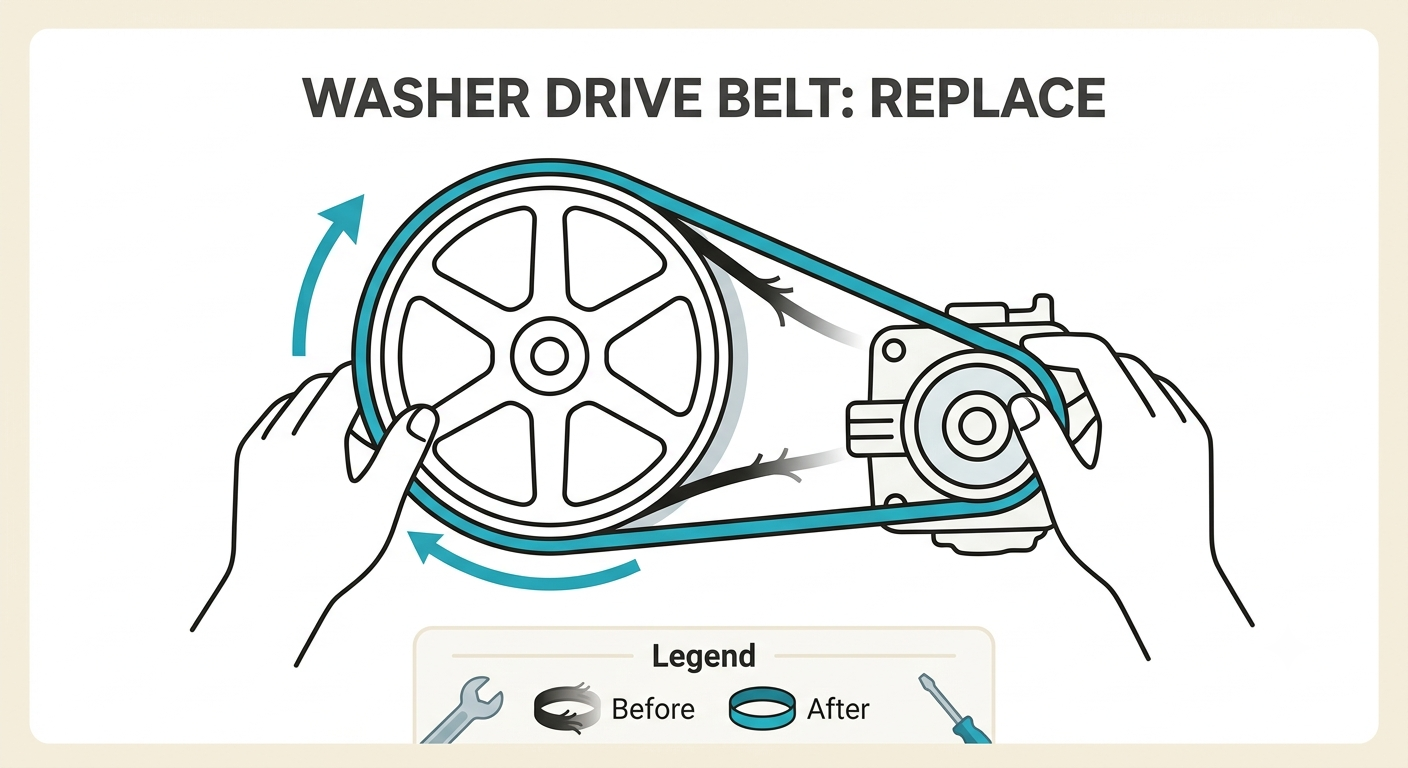
The drive belt in a washing machine connects the motor to the drum. When it snaps or slips, the motor keeps running but the drum sits still; your clothes stay wet while the machine runs through a full cycle doing nothing useful. It's one of those faults that looks more serious than it is, often confused with a motor fault or a failed lid switch before anyone thinks to check the belt.
Belt failure is one of the more common mechanical faults in belt-drive washing machines, and it's also one of the cheaper ones to fix. The belt itself is an inexpensive part; genuine replacements typically run $15 to $40 depending on the model. Most homeowners can complete the replacement at home with basic tools in under an hour. The harder part is knowing the belt is actually the problem before pulling the machine apart.
This guide covers how to confirm the belt is the fault, the tools and parts you'll need, and how to replace it step by step on most belt-drive front loaders.
Signs You Need to Replace Your Washing Machine Drive Belt
Before you pull the machine apart, check that the belt is actually the issue. These symptoms point to a drive belt fault:
- Drum not spinning during a cycle: The motor's running (you can hear it) but the drum stays still. This is the classic sign of a snapped or slipped drive belt.
- Burning rubber smell: If the belt's slipped rather than snapped, it may be riding against the pulley and producing a burning smell during the spin cycle.
- Squealing or squeaking during spin: A belt that's worn, stretched, or starting to slip can make a high-pitched noise during the spin phase.
- Drum spins too freely by hand: Open the door and try spinning the drum. A little resistance is normal. If it spins with almost no resistance and you can't hear the motor when the machine's powered on, the belt has likely snapped.
Not all washing machines use a drive belt. Many modern front loaders use direct-drive motors, which connect directly to the drum with no belt at all. If you can't find a belt after removing the back panel, your machine is probably direct-drive.
What You Need Before You Start
Tools:
- Phillips head screwdriver
- Flat-head screwdriver
- Torx bit set (some brands require these, particularly LG and Samsung)
Parts:
- A replacement drive belt matched to your model number
Safety:
Disconnect the washing machine from the 240V power supply before you start. Unplug it from the wall; don't rely on switching the machine off at the panel.
You'll also need your model number to order the right belt. It's usually on a label inside the door frame or on the back panel. Write it down before you start.
How to Replace a Washing Machine Drive Belt: Step by Step
Step 1: Unplug the machine
Disconnect the power at the wall socket. Don't work on a plugged-in appliance.
Step 2: Pull the machine away from the wall
Give yourself enough room to get at the back panel. For most front loaders, the drive belt is accessed from the rear.
Step 3: Remove the back panel
Undo the screws holding the back panel (Phillips head for most models, Torx for some) and set the panel aside.
Step 4: Locate the belt
The drive belt runs between the motor pulley at the bottom and the drum pulley, which is the large wheel around the drum. If the belt's snapped, you'll find it sitting at the bottom of the machine. If
it's slipped, it may be bunched on the motor pulley.
Step 5: Remove the old belt
If the belt's still on, pull it free from the motor pulley first, then slip it off the drum.
Step 6: Fit the new belt
Loop the new belt around the drum pulley first. Holding the belt against the drum, stretch it onto the motor pulley. This takes some effort: rotate the drum slowly by hand as you work the belt onto the
pulley, spreading it evenly. The belt should sit in the groove, not ride on the edge.
Step 7: Check the alignment and refit
Rotate the drum by hand a few full turns and check the belt stays seated on both pulleys. Refit the back panel, push the machine back, and run a short cycle to test.
Getting the Right Drive Belt for Your Model
Drive belts aren't universal. They vary in length, width, and groove profile depending on the drum diameter and motor pulley design of each model. A belt from a different model might look right but will wear faster, slip more easily, or not transfer power properly.
Your model number is the key. Look for a label:
- Inside the door frame (most common on front loaders)
- On the back panel of the machine
- Sometimes on the side panel near the hose connections
A genuine OEM drive belt is made to the same specification as the original, including the belt profile and stretch characteristics. A generic alternative is made to a general tolerance and may not hold tension consistently under load.
If you're not sure which belt fits your machine, call the Genuine Appliance Parts team on 03 8373 6044. We can identify the right part from your model number.
Frequently Asked Questions
Why has my washing machine drum stopped turning?
The most common cause is a snapped or slipped drive belt. Other causes include a faulty lid switch (top loaders), a motor fault, or a blocked pump stopping the cycle early. The hand-spin test is a good first check: little resistance with no motor sound when the machine's powered on points to the belt.
Can I replace a washing machine drive belt myself?
Yes, for most models. You need to remove the back panel, which isn't hard with basic tools. The trickiest part is stretching the new belt onto the motor pulley, but no specialist equipment is needed. Set aside 30 to 60 minutes for a first-time repair.
How do I know if my machine is belt-drive or direct-drive?
Remove the back panel and look for a rubber belt running between the motor and the drum. If there's no belt and the motor connects directly to the drum shaft, it's a direct-drive machine. Direct-drive machines don't use a drive belt.
How long does a washing machine drive belt last?
In normal household use, a genuine drive belt typically lasts 8 to 12 years. Heavy loads, frequent use, and worn motor or drum bearings can shorten that.
What to Do Next
Replacing a drive belt is one of the more satisfying washing machine repairs to do yourself. The signs are clear once you know what to look for, the belt is accessible on most front loaders, and the repair comes down to routing the new belt correctly and checking it stays seated through a full drum rotation. Most people who attempt it finish in their first try.
Before you order, get your model number first. It's on a label inside the door frame or on the back panel of the machine. Drive belts aren't universal; the right belt for your model will fit the drum and motor pulleys at the correct tension. A generic or wrong-model belt may sit on the pulleys but will wear faster or slip under load.
Genuine Appliance Parts stocks washing machine drive belts for Electrolux, Westinghouse, Simpson, LG, Samsung, Bosch, and more. Browse by model number to find the right belt, or call us on 03 8373 6044 and we'll identify the correct part. Parts ship flat-rate at $8.95 Australia-wide.
About the Author